Why Giving Became a Game in China: The Mobile Philanthropy Revolution That Captured 1.4 Billion People
Alibaba's Ant Forest turns green habits into real trees; Tencent's 99 Giving Day raises huge sums in three days
Gamification helped Chinese giving move past distrust
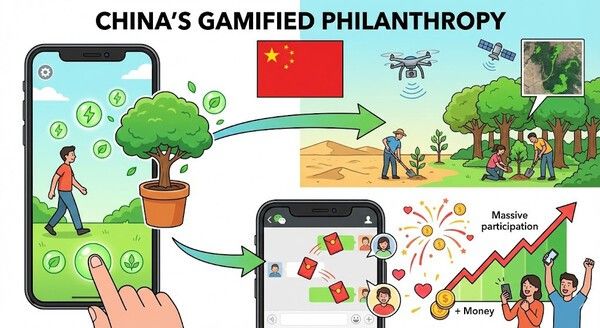
For a young office worker in Shanghai, the morning starts with tapping a phone screen. She opens the Alipay app and makes the rounds of friends' lists collecting 'energy balls,' as if playing a mobile game. When the virtual energy she earns by taking public transit or choosing electronic receipts fills up, a real tree is planted in her name in the Kubuqi Desert in Inner Mongolia.
Giving as play
In China, giving is no longer a solemn moral act but a huge, engaging game played on smartphones by a nation of 1.4 billion. A gamified philanthropy revolution led by tech giants such as Alibaba and Tencent has reshaped Chinese charity.
Ant Forest
Alibaba's Ant Forest, a symbol of Chinese mobile giving, rewards eco-friendly actions such as walking, using shared bicycles and paying bills online with virtual energy that turns into trees planted in arid regions. Users can see their trees by satellite image, which makes the impact tangible.
Tencent's 99 Giving Day
Tencent's annual 99 Giving Day, held in early September, raises enormous sums in just three days by matching donations and turning giving into a social event among friends.
What Korea can learn
Making giving fun, visible and social helped Chinese platforms overcome distrust of charities. Korean platforms such as Naver Happybean and Kakao Together already use similar ideas, and there is room to go further.
This is an English edition of a Give Times report first published in Korean on February 3, 2026. Read the original: 중국의 기부는 왜 '게임'이 되었나? 14억을 홀린 모바일 나눔 혁명