Special Donations Can Be Credited Up to Full Income, General Donations Up to 30%: What the Receipt Type Decides
Credit rates are the same for both types; only the limits differ
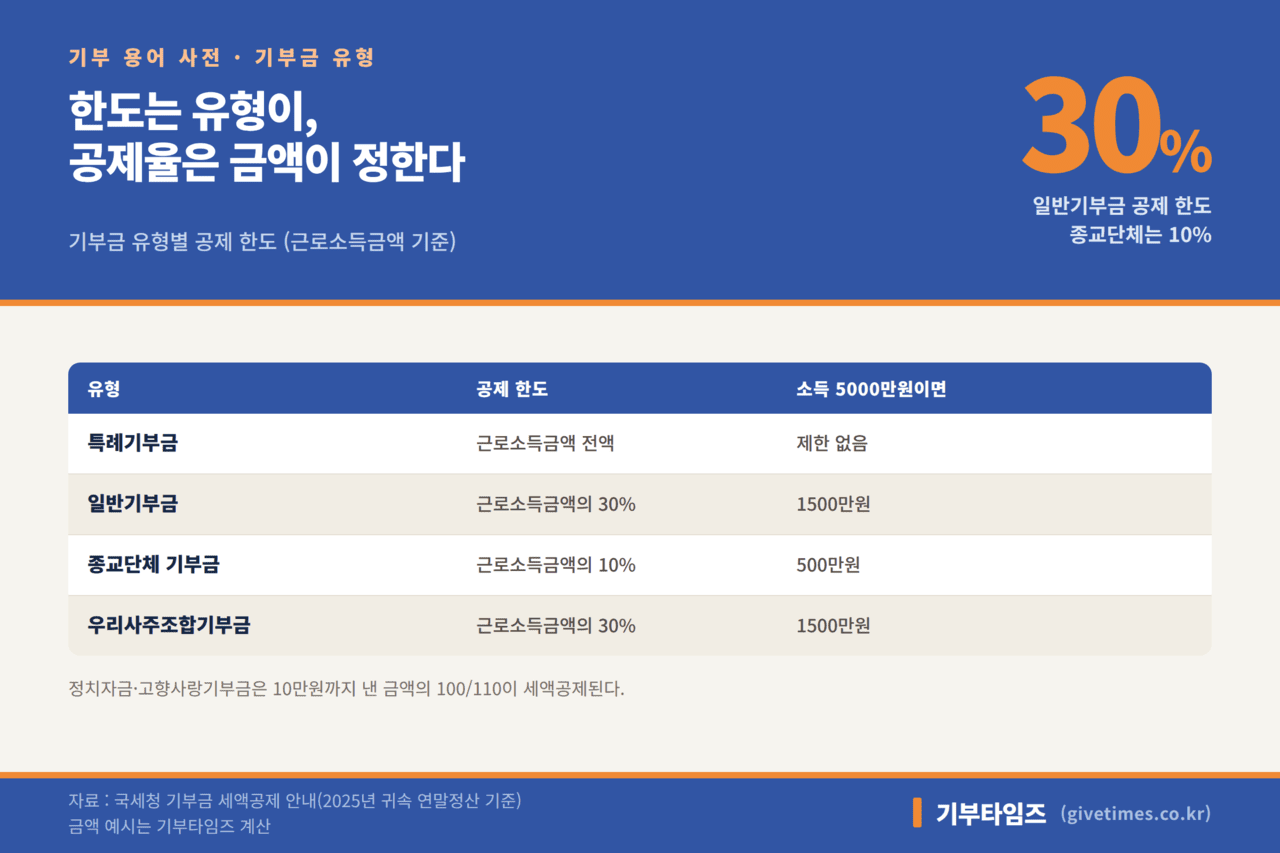
Gifts to religious organizations have a lower 10% limit
Every Korean donation receipt carries a type code: special donation, general donation, political fund, Hometown Love Donation and so on. The short answer to what the code decides: the type sets the limit on how much can be credited, while the amount sets the credit rate.
Income Tax Act; National Tax Service donation tax credit guidance
Who received the gift decides the type
Donors do not choose the type; it depends on the recipient. Special donations include gifts to the state and local governments, national defense contributions, relief for disaster victims, and facility, education, scholarship and research funds given to private schools and nonprofit education foundations. Volunteer services in special disaster areas also count. General donations are gifts to public-interest corporations for social welfare, culture, arts, education, religion and charity, which covers most everyday giving. Union dues and contributions to in-house worker welfare funds are also general donations.
Old names still used
Special donations were formerly called statutory donations and general donations designated donations. Political donations and Hometown Love Donations are handled separately; for both, 100/110 of gifts up to 100,000 won is credited, so with local income tax nearly the full amount comes back.
The limit is where they differ
Special donations can be credited up to the full amount of earned income; general donations up to 30%; donations to religious organizations up to 10%. The credit rate is the same for both main types: 15% up to 10 million won and 30% above it. Amounts above the limit can be carried forward for 10 years.
This is an English edition of a Give Times report first published in Korean on September 6, 2026. Read the original: 특례기부금은 한도가 소득 전액, 일반기부금은 30%…영수증 코드가 갈리는 지점